Iterating MVPs Faster: AI Prototyping as a Product Advantage
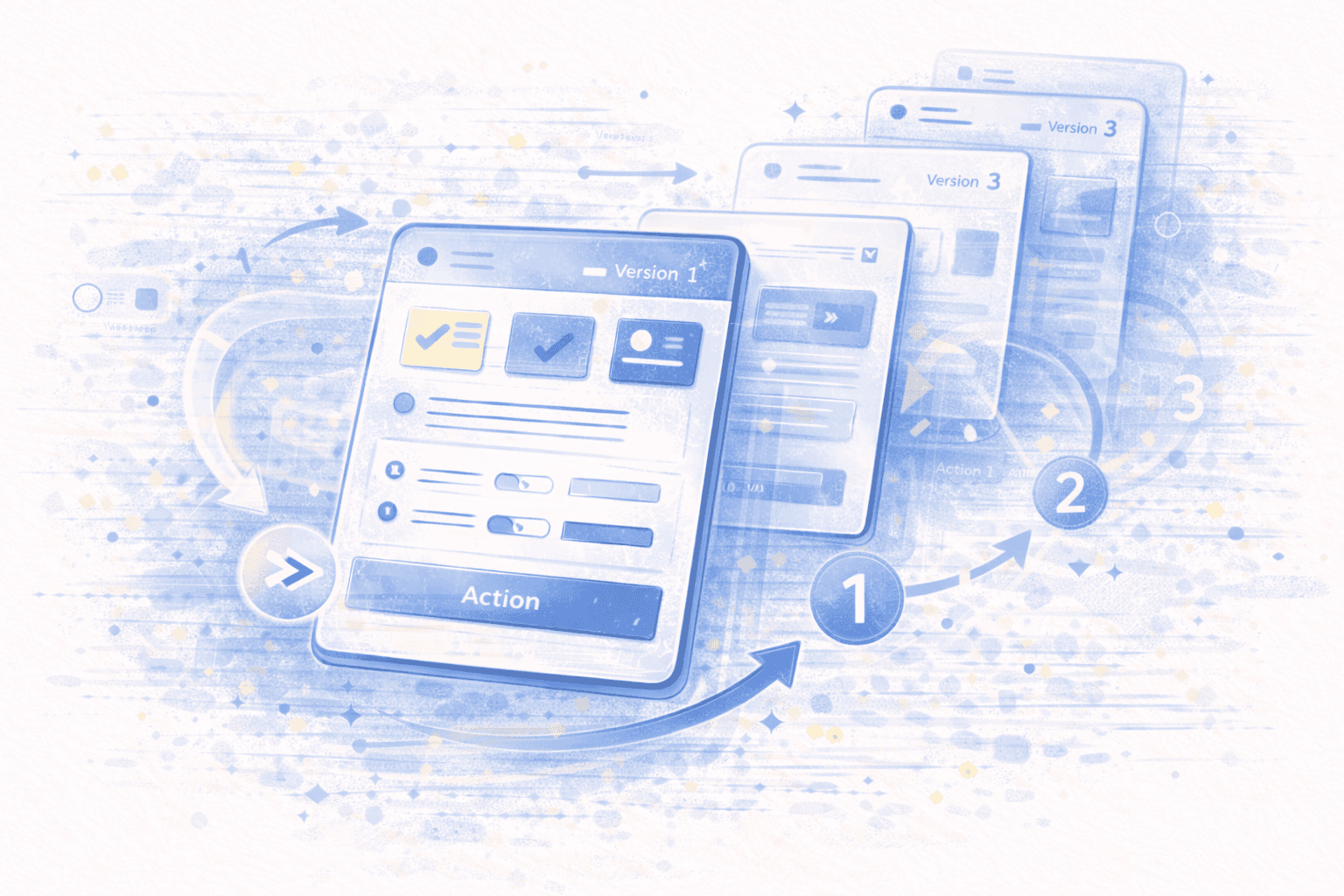
FROM WIREFRAMES TO REAL INTERACTIONS
Static mockups are no longer enough for early validation. With modern prototyping tools, I can simulate real flows, logic, and states. This helps stakeholders and users react to actual behavior, not assumptions, leading to more honest feedback and faster alignment.
FASTER VALIDATION, LOWER RISK
Prototyping MVPs early allows teams to test value before investing heavily. Instead of debating features, we observe how users interact, where they hesitate, and what they ignore. This short feedback loop helps avoid building the wrong thing with the right technology.
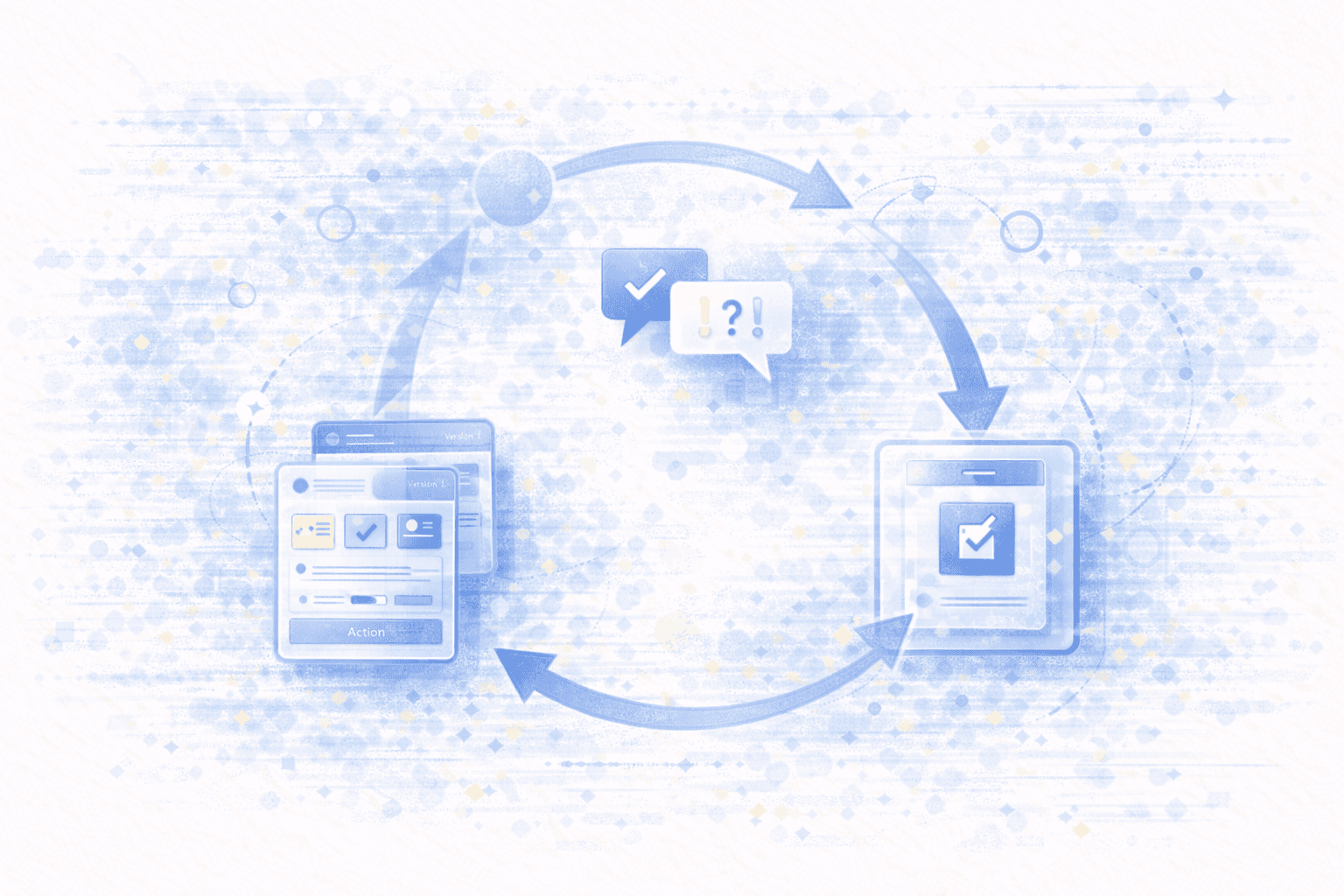
DESIGNING WITH TECH CONSTRAINTS IN MIND
Tools like Lovable, Base44, or Antigravity introduce constraints — and that’s a strength. Designing within real limitations forces prioritization and clearer product thinking. The result is MVPs focused on outcomes, not over-engineered solutions.
BRIDGING DESIGN, PRODUCT, AND ENGINEERING
Functional prototypes create a shared reference point. They help designers, PMs, and developers speak the same language. Specs become clearer, trade-offs are visible, and handoffs feel less abstract. Prototypes stop being just design artifacts and start becoming product assets.
FINAL THOUGHTS
Iterating MVPs through functional prototypes isn’t about skipping engineering — it’s about using time and effort wisely. For a UX/Product Designer, these tools unlock faster learning, better decisions, and stronger products. The real advantage isn’t the tool itself, but the ability to learn before it’s too expensive to change.

LATEST BLOG